- Brain Health
- Stroke Warning Signs: Remember FAST and Act Quickly
Suspected stroke is an emergency. Seek emergency hospital care immediately rather than waiting for a clinic visit, including when the symptoms have already improved.
BRAIN HEALTH · PATIENT GUIDE
Stroke warning signs can appear in the middle of an ordinary conversation or while someone is doing a familiar task. A person may suddenly struggle to speak, lose strength in an arm or develop a drooping face. The important response is to recognise that something has changed and get emergency help.
You do not need to identify the type of stroke at home. That is the hospital team’s job. Your role is to notice the change, explain when it began and avoid losing time while waiting for the person to feel better.
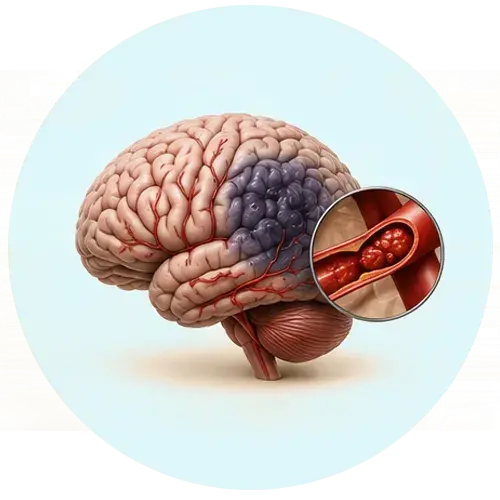
Use FAST to recognise stroke warning signs
FAST is a simple memory aid. It does not cover every possible symptom, but it helps families recognise several important changes.
- Face: a new uneven smile or drooping on one side.
- Arms: sudden difficulty lifting an arm or keeping it raised.
- Speech: words become unclear, confused or difficult to produce.
- Time: get emergency help immediately when these changes appear.
Not every stroke looks the same
Sudden problems with vision, balance, walking or sensation can also be important. Some people experience a severe headache or a combination of symptoms. Do not use the absence of facial drooping as a reason to dismiss another abrupt neurological change.
Stroke can affect younger adults as well as older people. A person’s age, fitness or apparent health should not delay emergency assessment when the symptoms are concerning. If you are uncertain, describe what you can see to emergency services and follow their instructions.
Why the timing of symptoms matters
Tell the emergency team when the person was last known to be well. If the symptoms were noticed on waking, explain that clearly rather than guessing a start time. Note whether the change was sudden and whether anything has improved or worsened since then.
A temporary improvement is not an all-clear. Symptoms that disappear may still signal an urgent problem. Do not wait to see whether they return, and do not drive yourself if you may be having a stroke. Ask for emergency assistance.
Assessment comes before a treatment decision
A stroke may involve a blocked blood vessel or bleeding. Hospital assessment and imaging help establish what has happened. The available treatment depends on the findings, timing and the person’s overall condition. An online description cannot determine which intervention is suitable.
While help is being arranged, follow the emergency team’s advice rather than trying home remedies. If possible, have the person’s medicine list ready and tell the team about relevant medical conditions. Gathering paperwork must not delay getting help.
After hospital care, ask about the recovery plan
Recovery can involve movement, communication, swallowing, thinking and emotional wellbeing. Different people need different combinations of rehabilitation and follow-up. A plan should reflect the difficulties the person actually has, rather than assuming everyone needs the same exercises or schedule.
Before leaving hospital, ask who will coordinate follow-up and whom to contact if new concerns arise. At a later consultation, bring the discharge summary, scan images, prescriptions and rehabilitation notes. It helps to write down practical problems at home, such as managing steps, getting dressed or following a conversation.
Discuss how the treatment plan will be reviewed, what support the family needs and how existing health conditions will be managed. New stroke warning signs require emergency reassessment, even when someone is already attending rehabilitation.
Questions patients often ask
What if the person seems better after a few minutes?
Get emergency medical help. A short-lived change in speech, strength or vision still needs urgent assessment and should not be treated as proof that the danger has passed.
Can a routine clinic visit replace emergency stroke care?
No. Suspected stroke needs hospital assessment immediately. A clinic consultation is appropriate for planned review after the urgent problem has been assessed and managed.
What should I bring to a stroke follow-up?
Bring the hospital discharge summary, scans, current prescriptions and any rehabilitation recommendations. Note the questions or daily activities that are still causing difficulty.
Discuss your questions at a consultation
For a planned consultation in Patancheruvu, Hyderabad, contact Manik Neuro Clinic. Dr. S.P. Manik Prabhu can review your symptoms and existing reports and discuss the next appropriate step. Bring prescriptions, scan images and the questions you would like answered.
This page provides general patient information and does not replace an individual medical assessment. Treatment recommendations depend on the clinical findings.