
- Brain Health
- Brain Hemorrhage Symptoms: Why Sudden Changes Need Urgent Care
A sudden severe headache, new weakness, a seizure or reduced consciousness needs emergency hospital assessment. Do not wait for a routine clinic appointment.
BRAIN HEALTH · PATIENT GUIDE
Brain hemorrhage symptoms may start suddenly, leaving a family unsure what has happened. The term means bleeding in or around the brain. It describes a serious problem that needs hospital assessment; it is not something that can be confirmed from a headache description alone.
Knowing the warning signs is useful, but the priority is action rather than self-diagnosis. Several neurological emergencies can look similar at first. A medical examination and the appropriate investigations are needed to find the cause and plan treatment.
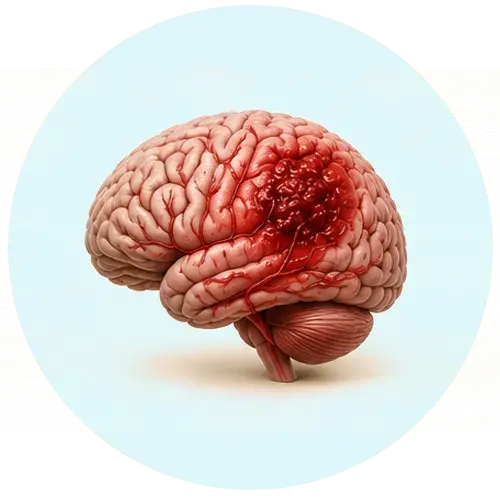
Brain hemorrhage symptoms that need an urgent response
An abruptly severe headache is particularly concerning, especially if it is unlike the person’s usual headaches. Other sudden changes can also signal a neurological emergency.
- A new loss of strength, particularly on one side.
- Difficulty speaking or understanding familiar words.
- A seizure or an unexplained collapse.
- Confusion, unusual drowsiness or reduced responsiveness.
- A severe headache with vomiting, neck stiffness or a change in vision.
The word hemorrhage does not explain the cause
Bleeding can affect different areas, and the reasons for it vary. Some cases involve a blood vessel problem, including a ruptured aneurysm; others have a different cause. Not every brain hemorrhage is an aneurysm, and an unruptured aneurysm is not the same as an active bleed.
This distinction matters when a family reads a report. Ask the treating team where the bleeding is, what may have caused it and what is known so far. A precise explanation is more useful than comparing the case with someone else’s experience.
What the emergency team needs to know
Explain when the symptoms started and how quickly they developed. Mention a recent injury, current medicines and any important medical history. If you do not know an answer, say so rather than guessing. Do not postpone emergency care to locate every report or prescription.
The hospital team may use brain imaging and other tests to establish the location of bleeding and investigate its cause. Further blood vessel imaging may be appropriate in some situations. Which tests are needed depends on the examination and the first investigation results.
Treatment is planned around the findings
There is no single operation or medicine for every brain hemorrhage. Some people need an operation or a procedure directed at a blood vessel; others need a different hospital treatment plan and close monitoring. The team considers the cause, location, severity and the person’s condition.
Ask what the immediate treatment is intended to achieve and which decisions may come later. If a procedure is proposed, ask about its expected benefit, important risks and the alternatives relevant to that particular situation. Avoid assuming that a treatment discussed online is suitable for every type of bleeding.
Make follow-up information practical
After discharge, families often need help understanding medicines, activity guidance, rehabilitation and the next review. Keep the discharge summary, scan images and written treatment plan together. A single folder makes it easier to answer questions at later appointments.
Write down the changes you notice at home without trying to interpret them yourself. Ask the treating team which changes require emergency reassessment and which can be discussed at a planned review. Also ask who should be contacted if the instructions are unclear. Recovery and follow-up needs differ, so another person’s timetable is not a reliable guide to your own.
Questions patients often ask
Is every sudden headache a brain hemorrhage?
No. A sudden severe headache has several possible causes, but some are emergencies. It needs prompt medical assessment rather than an attempt to identify the cause at home.
Does every brain bleed need surgery?
No single treatment fits every case. Hospital specialists decide what is appropriate after reviewing the bleeding, its cause and the person’s condition.
Can the clinic review hospital records later?
For a planned follow-up, contact Manik Neuro Clinic and bring the discharge summary, scans and prescriptions. New emergency symptoms should be assessed in hospital first.
Discuss your questions at a consultation
For a planned consultation in Patancheruvu, Hyderabad, contact Manik Neuro Clinic. Dr. S.P. Manik Prabhu can review your symptoms and existing reports and discuss the next appropriate step. Bring prescriptions, scan images and the questions you would like answered.
This page provides general patient information and does not replace an individual medical assessment. Treatment recommendations depend on the clinical findings.