- Brain Health
- Head Injury Warning Signs: What to Watch for After a Bump
After a head injury, reduced consciousness, a seizure, new weakness or difficulty speaking or walking needs emergency hospital care. Do not wait for a routine follow-up.
BRAIN HEALTH · PATIENT GUIDE
After a fall or collision, it is natural to focus on the swelling or cut you can see. Head injury warning signs are not always limited to the outside of the head. Changes in alertness, movement, speech or behaviour may be more important than the size of a visible bump.
This guide explains the questions that often arise after an injury. It cannot tell whether a particular injury is minor. If symptoms are worrying, seek medical assessment rather than using an online checklist to decide that an injury is safe.
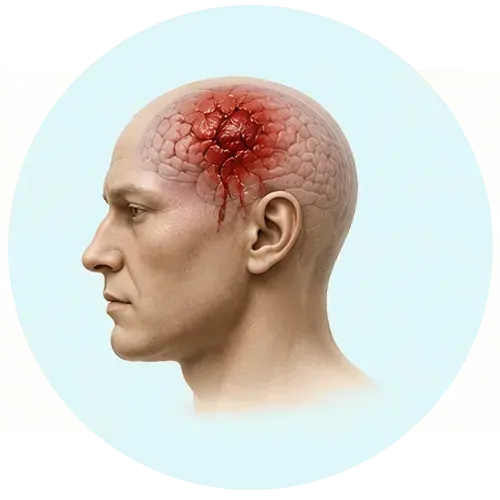
Head injury warning signs that need urgent attention
Emergency assessment is needed when someone cannot stay awake, does not recover consciousness normally, has a seizure or develops a new neurological problem. A serious mechanism of injury, such as a high-speed collision, is another reason not to judge severity by appearance alone.
- New weakness, numbness or difficulty coordinating movement.
- A change in speech, understanding, balance or walking.
- Increasing confusion or unusual difficulty staying awake.
- A seizure or a deterioration after initially seeming well.
- A concerning headache, vomiting or another worsening symptom after the injury.
Tell the team how the injury happened
Explain the event, any loss of consciousness and what changed afterwards. Mention current medicines, particularly medicines that affect blood clotting, and relevant medical conditions. A clinician needs that information when deciding what assessment and observation are appropriate.
If you are helping someone else, give a factual account of what you saw. Say whether the person remembers the event, whether symptoms have changed and whether anything remains uncertain. Do not delay emergency care while trying to reconstruct every detail.
What the word concussion means for follow-up
Concussion is a form of brain injury. People may experience symptoms affecting concentration, comfort or usual activities after an injury, even when there is no obvious external wound. A familiar label should not be used to dismiss a new or worsening problem.
The advice after assessment should explain what to expect, what to avoid and when to seek another review. If you are unsure what a discharge instruction means, ask the treating team for clarification rather than replacing it with advice intended for someone else’s injury.
Before going home, check the practical details
Ask who should stay with the injured person, which warning signs require a return to hospital and whom to contact with a concern. Keep the discharge advice where the person helping at home can read it. Observation instructions should be appropriate to the actual assessment and the person’s circumstances.
Also clarify advice about prescribed medicines, alcohol, driving, work, school and sport. Return to activities should follow the treating clinician’s guidance. Feeling better in one situation does not necessarily establish that a more demanding or risky activity is suitable.
Make a planned head injury review useful
Bring the hospital records, scan images if obtained and a list of current medicines. Note symptoms that continue and how they affect normal tasks. Examples might include difficulty reading for long periods, returning to work or following a conversation, but describe only what has actually happened.
Ask which changes should improve with the current plan and which need a different assessment. A scheduled appointment is useful for stable follow-up questions. It must not become a reason to wait when head injury warning signs appear. New or worsening symptoms should be assessed according to their urgency.
Questions patients often ask
Can a head injury be important without a large wound?
Yes. The appearance of the scalp does not, by itself, show what has happened inside. Symptoms, the injury mechanism and the medical assessment are important.
Should I wait for a booked follow-up if symptoms worsen?
No. Seek medical help for new or worsening concerns, and emergency care for serious warning signs. A routine appointment does not replace urgent reassessment.
Can I return to sport as soon as the headache settles?
Ask the treating clinician for a return-to-activity plan. A change in one symptom alone does not establish that contact sport or another risky activity is safe.
Discuss your questions at a consultation
For a planned consultation in Patancheruvu, Hyderabad, contact Manik Neuro Clinic. Dr. S.P. Manik Prabhu can review your symptoms and existing reports and discuss the next appropriate step. Bring prescriptions, scan images and the questions you would like answered.
This page provides general patient information and does not replace an individual medical assessment. Treatment recommendations depend on the clinical findings.