
- Nerve Health
- Pinched Nerve Symptoms: Numbness, Tingling and Weakness
NERVE HEALTH · PATIENT GUIDE
A hand that repeatedly goes numb or a leg that feels weak can be frustrating, especially when the symptoms come and go. Pinched nerve symptoms are one possible explanation, but similar sensations can have other causes. Finding the source is more useful than giving the sensation a label.
A nerve may be irritated or compressed near the spine or farther along its route through a limb. The pattern of symptoms helps a clinician decide what to examine and whether further tests would be useful.
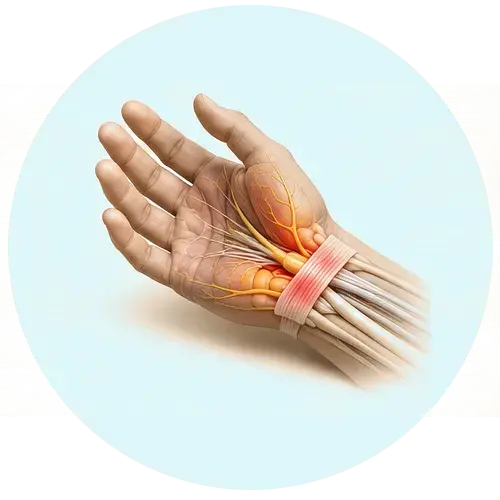
Common pinched nerve symptoms to describe
The experience may include pain, reduced sensation, pins and needles or weakness. The affected area depends on the nerve involved. Tell the clinician exactly where the problem occurs and whether the area is spreading.
- Which fingers, part of the hand, foot or area of skin is affected.
- Whether there is pain as well as a change in sensation.
- A weaker grip, dropping objects or difficulty with a familiar movement.
- Symptoms associated with a position, repetitive task or time of day.
- Whether the problem is becoming more frequent or persistent.
Why the location matters
Hand symptoms may arise from a problem at the wrist, elbow or neck, among other possibilities. A common example is carpal tunnel syndrome, where pressure on a nerve at the wrist can cause hand symptoms. Not every numb hand has carpal tunnel syndrome.
Similarly, leg symptoms may relate to a nerve root near the spine or a different problem. Describing the whole route of pain or altered sensation helps avoid focusing only on the point that feels worst. Mention any associated neck or back symptoms, but do not assume they explain everything.
What an assessment may involve
The clinician may examine strength, sensation, reflexes and the movements relevant to the affected nerve. The history also matters: how symptoms began, whether there was an injury and how work or ordinary activities are affected.
Nerve conduction testing, imaging or other investigations may be considered when they can clarify the diagnosis or guide care. Not everyone needs every test. Bring previous results so that the clinician can see what has already been checked and explain whether a further investigation would answer a useful question.
The plan should fit the cause
Depending on the diagnosis, care may include changes to aggravating activities, rehabilitation, a suitable splint or prescribed treatment. Selected patients need discussion of an injection or operation. The same wrist splint, exercise or procedure is not appropriate for every nerve problem.
Explain what you need to be able to do, such as using tools, typing or walking comfortably. Ask which changes are likely to help and how improvement will be judged. If a treatment has already been tried, describe its duration and effect rather than simply labelling it unsuccessful.
Weakness deserves attention
New or increasing weakness should be assessed promptly. A sudden change in one side of the body with facial drooping or speech difficulty needs emergency evaluation for a possible stroke. Back or leg symptoms with new bladder or bowel problems or numbness around the genitals or buttocks also need emergency care.
For a longstanding, stable concern, keep a brief record of the affected area and the tasks that are difficult. Ask when the plan should be reviewed and which changes should prompt earlier contact. A clear follow-up arrangement helps prevent a gradually worsening problem from being overlooked.
Questions patients often ask
Does tingling always mean a nerve is compressed?
No. Tingling can have several explanations. The pattern, medical history and examination help determine whether compression is likely and where further assessment should focus.
Are nerve tests always necessary?
No. A clinician decides whether a nerve conduction study or another test would help answer a specific question. Existing results should be reviewed before repeating investigations.
Does nerve compression always require surgery?
No. Care depends on the location, cause, severity and effect on nerve function. A procedure is considered when it is appropriate to the individual findings.
Discuss your questions at a consultation
For a planned consultation in Patancheruvu, Hyderabad, contact Manik Neuro Clinic. Dr. S.P. Manik Prabhu can review your symptoms and existing reports and discuss the next appropriate step. Bring prescriptions, scan images and the questions you would like answered.
This page provides general patient information and does not replace an individual medical assessment. Treatment recommendations depend on the clinical findings.